

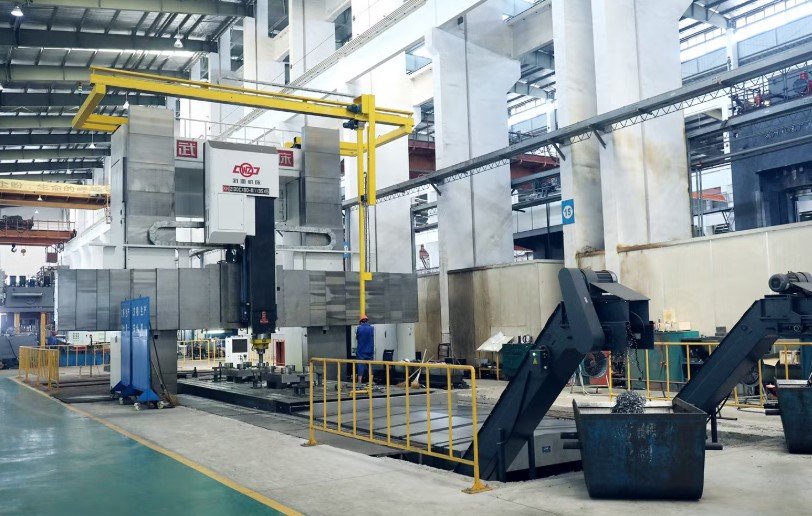
Beneath the glittering skyline of Dubai and the ambitious urban expansions of Abu Dhabi lies a silent, hydraulic heartbeat. While global attention fixates on the architectural grandeur of the Burj Khalifa or the innovative design of the Louvre Abu Dhabi, a more fundamental engineering story unfolds at ground level. The United Arab Emirates’ unprecedented construction boom—a testament to visionary ambition and economic diversification—is fundamentally powered by a critical yet overlooked component: advanced hydraulic oil. This specialized fluid isn’t merely a lubricant; it is the essential medium of power transmission, the primary agent of thermal management, and the ultimate protector of multi-million-dollar capital assets against one of the planet’s most punishing operating environments.
This deep-dive analysis explores the multifaceted role of hydraulic fluids in the UAE’s construction sector, examining the extreme operational challenges, the technological evolution of the fluids themselves, and the critical importance of maintenance philosophy. We will also highlight how specialized lubricant technologies, such as those pioneered by Nescol Lubricants, are not just supporting but actively enabling the scale, speed, and sustainability of modern Emirati construction.
The Hydraulic Imperative in Heavy Machinery
Modern UAE construction is an exercise in scaling colossal forces. The machinery employed is a lexicon of power:
Tower Cranes: Lifting prefabricated modules hundreds of meters vertically.
Hydraulic Excavators: Excavating foundations and moving thousands of tons of sand and rock.
Crawler Cranes: Hoisting massive structural elements with precision.
Concrete Pumps: Transporting wet concrete vertically and horizontally across vast sites.
Pile Drivers: Using immense hydraulic force to drive foundational piles deep into the earth.
The common denominator is hydraulics. Unlike purely mechanical or electrical systems, hydraulics offer an unparalleled power-to-weight ratio, precise control of massive force, and inherent durability. The system is elegantly simple in principle: a pump pressurizes the hydraulic oil, which then travels through lines to actuators (cylinders or motors), where the fluid’s energy is converted back into powerful mechanical motion.
The Core Functions of Hydraulic Oil in This Ecosystem:
Power Transmission: Acts as an incompressible energy conduit.
Lubrication: Forms a protective film on pumps, valves, pistons, and vane surfaces.
Heat Dissipation: Absorbs and carries away waste heat from high-pressure zones to reservoirs and coolers.
Contamination Transport: Suspends microscopic wear particles and contaminants until captured by filtration systems.
Corrosion and Wear Inhibition: Utilizes advanced additive packages to protect ferrous and non-ferrous metals.
Sealing Enhancement: Helps maintain sealing in fine-clearance components.
The UAE's Extreme Operating Environment – A Perfect Storm for Fluid Degradation
The local climate and operational tempo create a “perfect storm” of stressors that push conventional hydraulic oils beyond their limits.
1. Thermal Onslaught:
Challenge: Ambient temperatures regularly exceed 45°C (113°F), with machinery surface temperatures soaring much higher. This causes thermal thinning (loss of viscosity), accelerating oxidation—a chemical breakdown that leads to acid formation, varnishing, and sludge.
Consequence: Reduced film strength, increased internal leakage (loss of efficiency), and the formation of abrasive deposits that clog valves and filters.
2. Particulate Invasion:
Challenge: Airborne silica (sand dust) is omnipresent. These fine, hard particles are highly abrasive and can bypass standard filtration if not properly managed by the fluid’s dispersant chemistry.
Consequence: Three-body abrasion, scoring of cylinder walls, and rapid wear of precision pump components, leading to catastrophic loss of pressure and control.
3. Hygroscopic Stress:
Challenge: High coastal humidity, combined with temperature swings, can lead to condensation inside reservoirs. Water ingress, even in small amounts (e.g., 100-500 ppm), is detrimental.
Consequence: Water promotes hydrolysis (breakdown of additives), causes rust and corrosion, reduces lubricity, and fosters microbial growth (“microbial slime”) that clogs systems.
4. Demand-Driven Intensity:
Challenge: Projects operate on 24/7 schedules to meet ambitious deadlines. This results in continuous, high-cycle operation with minimal cooling downtime, creating sustained thermal and mechanical stress.
Consequence: Accelerated additive depletion and base oil degradation, shortening effective fluid life.
Technological Evolution – From Simple Fluid to Engineered Solution
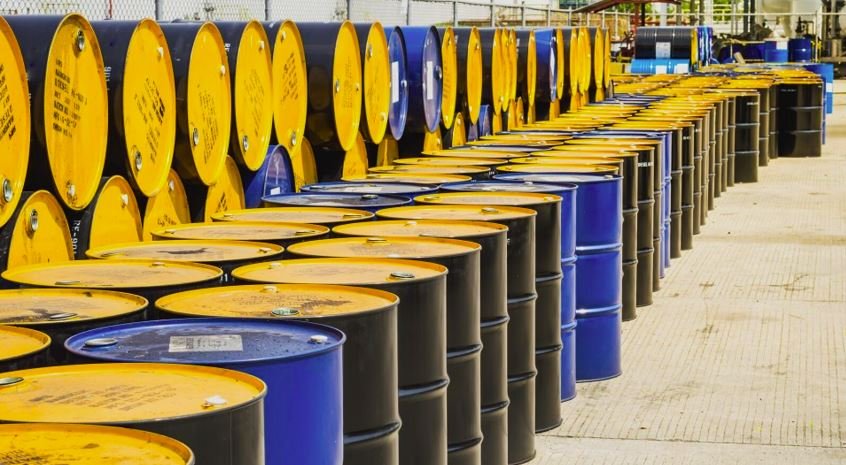
The industry’s response has been the development of next-generation hydraulic oils engineered with sophisticated chemistry. Leading formulations, such as those from Nescol Lubricants, incorporate several critical technologies:
High-Performance Base Oils: Use of Group III severely hydrocracked or Group IV (PAO) synthetic base stocks. These offer superior inherent thermal stability, a high natural viscosity index (VI), and lower volatility compared to conventional Group I/II mineral oils.
Advanced Additive Packages:
- High VI Improvers: Polymers that allow the oil to maintain optimal viscosity across a wide temperature range (e.g., -10°C to 80°C).
- Anti-Wear (AW) Agents: Zinc dialkyldithiophosphate (ZDDP) and ashless alternatives form sacrificial layers on metal surfaces.
- Oxidation Inhibitors: Radical scavengers that dramatically slow the chain reaction of oil with oxygen.
- Demulsifiers: Enable rapid and clean separation of water from the oil in the reservoir.
- Dispersants: Keep fine soot and silt particles in suspension, preventing agglomeration and deposit formation.
The Value Proposition of Premium Fluids like Nescol Lubricants:
Investing in high-tier hydraulic oil is a strategic operational decision, not just a procurement cost. The total cost of ownership (TCO) model reveals the true value:
Extended Oil Drain Intervals: Synthetic-based fluids can last 2-3 times longer than mineral oils.
Reduced Component Wear: Leading to fewer unscheduled downtimes and extended overhaul cycles for pumps and motors.
Improved Energy Efficiency: Higher VI and better lubricity reduce internal friction, lowering fuel consumption for diesel-powered equipment.
Superior Contamination Tolerance: Systems remain cleaner, reducing filter change frequency and protecting sensitive electro-hydraulic controls.
Comparative Analysis & The Role of Specialized Formulators
Not all hydraulic oils are created equal. The choice between a standard mineral oil, a premium mineral-based hydraulic oil, and a full synthetic or semi-synthetic formulation like those offered by Nescol Lubricants has profound implications.
Comparison Table: Hydraulic Oil Types for UAE Construction
| Feature | Conventional Mineral Oil (HLP) | Premium High-VI Mineral Oil (HVLP) | Full Synthetic / Advanced Technology Fluid (e.g., Nescol Lubricants-type formulations) |
|---|---|---|---|
| Base Stock | Group I/II Mineral Oil | Group II/II+ Mineral Oil with VI Improvers | Group III (HC Synthetic), Group IV (PAO), or Group V (Ester) |
| Viscosity Index | Moderate (~95-100) | High (~140-160) | Very High (160+) |
| Thermal/Oxidative Stability | Fair – Good. Prone to varnish at high temps. | Good. Better resistance than conventional. | Excellent. Withstands sustained high temperatures without breakdown. |
| Cold Weather Start-Up | Poor. Becomes very viscous. | Moderate. VI improvers help. | Excellent. Remains fluid for easier cold starts. |
| Additive Durability | Moderate. Additives deplete relatively quickly. | Good. Stabilized additive package. | Superior. Advanced chemistry provides longer-lasting protection. |
| Seal Compatibility | Good with standard elastomers. | Good. | Requires careful formulation but excellent with modern seals. |
| Water Separation | Variable. Often slow. | Good. Formulated for better demulsibility. | Excellent. Rapid, clean water separation. |
| Expected Drain Interval | Shortest (Reference: 1000-2000 hrs) | Moderate (Reference: 2000-3000 hrs) | Longest (Reference: 4000-6000+ hrs) |
| TCO & ROI | Lowest upfront cost, highest long-term risk. | Moderate. Balanced choice for less severe duty. | Highest upfront cost, lowest long-term TCO. Protects capital investment. |
| Environmental Profile | Standard. | Standard. | Often better biodegradability, lower toxicity, reduced waste volume. |
Pros & Cons Analysis:
Conventional Mineral Oils:
Pros: Low initial purchase price, widely available, suitable for older, less sensitive equipment in mild conditions.
Cons: Poor performance in extreme heat/cold, shorter life, higher risk of unscheduled downtime and component failure in UAE conditions, higher waste generation.
Premium Synthetic/Semi-Synthetic Oils (e.g., Nescol Lubricants):
Pros: Maximum equipment protection and uptime, extended drain intervals, improved energy efficiency, superior performance in extreme temperatures, lower long-term operating costs, supports sustainability goals.
Cons: Higher initial purchase price per liter, requires technical understanding for proper selection, potential compatibility issues with older seals or paints if not correctly specified.
The Future Horizon – Smart Hydraulics and Sustainability
The future is intelligent and green. The next evolution integrates Internet of Things (IoT) sensors directly into hydraulic systems, enabling real-time monitoring of oil temperature, pressure, moisture, and particulate levels. This data feeds into predictive analytics platforms, moving maintenance from scheduled to condition-based, preventing failures before they occur.
Simultaneously, the global and UAE-specific push for sustainability is reshaping specifications. There is growing demand for:
Bio-based Hydraulic Fluids: Formulations with high renewable content.
Extended Life Cycles: Directly reducing used oil waste.
Energy-Efficient Formulations: Contributing to lower CO₂ emissions from machinery.
Spill-Responsible Chemistry: Fluids with lower ecological toxicity.
These trends align perfectly with the value proposition of advanced synthetic technologies, positioning forward-thinking companies at the forefront of both performance and environmental stewardship.
Conclusion: Securing the Foundation of Ambition
The story of UAE construction is written in steel and concrete, but it is authored by immense hydraulic force. The choice of hydraulic oil is a fundamental engineering decision that directly impacts project timelines, operational budgets, environmental footprint, and safety outcomes. In an environment as demanding as the UAE, opting for anything less than a fluid engineered for the extremes—such as the advanced formulations from specialists like Nescol Lubricants—represents a significant operational risk.
As the UAE continues to build its future, from NEOM’s ambitions to the expansion of its urban centers, the machinery will grow more sophisticated, the schedules more aggressive, and the sustainability mandates more stringent. The hydraulic oil that powers these giants must evolve in tandem. By embracing cutting-edge fluid technology, rigorous scientific maintenance, and expert partnerships, the UAE’s construction industry ensures that the unseen lifeblood within its machines remains as resilient and forward-looking as the nation’s vision itself. The giants will continue to rise, powerfully and reliably, drop by engineered drop.
FAQs
Longer life (2-3x drains), better heat resistance, less wear, and improved fuel efficiency. The higher upfront cost saves money long-term.